






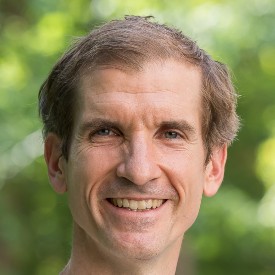
Below, Audun Dahl shares five key insights from his new book, Between Fixed and Fickle: Why Our Moral Views Keep Changing.
Audun is Associate Professor of Psychology at Cornell University.
What’s the big idea?
People often see their own moral beliefs as fixed truths and assume that those who disagree are morally fickle, irrational, or selfish, but psychology tells a different story. Moral change usually happens for understandable reasons, rather than mere moral weakness.
Listen to the audio version of this Book Bite—read by Audun himself—in the Next Big Idea App, or buy the book.

1. Moral change is everywhere.
A few years ago, at a funeral reception, I sat next to a retired elementary school teacher and her former student—at the time, in his thirties. I asked if anything about her former students had ever surprised her. After a pause, she said something that surprised me:
“Everyone turns into respectable people.”
“Really?!” I thought. “In these turbulent times, you think everyone is becoming respectable?”
Although, I knew what the teacher meant. I’d been a kid myself, and not a very well-behaved one. And now look at us, decades older, dignified and suited up.
It’s a universal fact: We’re dumped into this world without knowing right from wrong. Systematic observations show that kids hit, bite, and kick others way more in their early years than later in life. Which is good. When adults bite others, they land in legal trouble. If we all went around hitting each other at the rate of an average toddler, you wouldn’t have the peace and quiet to listen to this recording.
Luckily, we change. Most of us eventually come to share basic moral concerns. We all think it’s generally wrong to harm and steal and generally good to help and be honest. By voting age, we’ve formed moral views about complex moral issues, like climate change, abortion, and freedom of speech. You can feel outrage at injustice against innocent people you’ve never met—even people who live an ocean away from you. No other animal does this; growing morality is a human feat.
And still, while new generations are forming a moral sense, many adults find that the world is getting worse. Specifically, they feel that the world is becoming less moral. Moral views are constantly changing, from early childhood and throughout history. So here’s the puzzle: Why do moral changes disturb us so? Shouldn’t we have gotten used to them by now?
2. When moral truths look fixed, moral change looks troubling.
Many moral principles look fixed and obvious: Slavery and genocide are wrong, democracy is good, honesty is a duty; you can fill in your favorites. The American Declaration of Independence said that basic rights to life and liberty were “self-evident” truths. They needed no further justification.
Except not everyone sees those truths. Thomas Jefferson drafted the Declaration of Independence and said he opposed slavery. Still, during his lifetime, Jefferson enslaved hundreds of Black people on his plantation. He abandoned any efforts to abolish slavery, even after he became the country’s third president. Today, democratic principles of free speech are under attack and being dismantled. People keep changing their moral minds about truths that seem obvious to us.
“Why are some people blind to our fixed moral truths?”
Those are the moral changes that trouble us most: The changes away from our fixed moral truths. Those changes suggest that some people are blind to the obvious, and that the fundamental rights and worth of human beings are something one can lose sight of. Why are some people blind to our fixed moral truths? How can anyone fail to see the wrongness of slavery or the goodness of democracy?
Call it the story of the fixed and fickle. The story starts with the idea that some moral truths are fixed: obvious and unchanging. If that’s true, whoever doesn’t see those moral truths must have a fickle sense of right and wrong. Their fickle moral sense must be pulled and pushed around by selfishness, unruly passions, irrationality, or other amoral forces. They must accept slavery because it serves their self-interest, oppose democracy when it suits them, and attack minorities out of blinding rage.
It’s a story you can find in political speeches, punditry, and the prestigious annals of scientific psychology. It’s an appealing story because it lets us hang onto our fixed moral truths and dismiss those who disagree. It’s an old story. But it’s also the wrong story.
3. To make sense of moral change, we can pause our moralizing.
As a psychologist, my day job is to study how kids and adults change their moral views. It’s a huge privilege. But actually, we all do this on a daily basis, without getting paid for it. We all try to divine why other people disagree with us about abortion, climate change, storming the Capitol, or—if we go further back—about slavery.
That’s where the story of the fixed and fickle goes awry. It tempts us into thinking that the moral truths we think are obvious should be equally obvious to everyone else. If the wrongness of abortion is obvious to us, it must be plain to everyone. So if we begin with moralizing, and with the idea that our moral truth is obvious, we’re on track to dismiss those who disagree. Before we’ve considered a single data point about the other side, we’re trapped into thinking they have a fickle sense of right and wrong.
To understand moral change, we can do something simple: pause our moralizing. We can set aside, for now, the question about whether the moral truth about abortion is pro-choice or pro-life. We do this not because we don’t believe in moral rights and wrongs. We do this because there’s a time to moralize and a time to do moral psychology, to understand where others are coming from and ask: The people we disagree with —how did they change into their moral views?
4. Science can help us make sense of moral change.
Moral change is difficult to understand. One source of difficulty is that we often don’t know the people we disagree with. Morality has a sorting effect. Moral disagreements drive us apart, and we don’t spend a lot of time with people who oppose our views on abortion, immigration, religion, or slavery. In the United States, Democrats and Republicans have been moving to separate neighborhoods, getting separate news, listening to separate podcasts, and living in separate worlds.
When we don’t know the other side, we resort to hearsay. We have to rely on the words of politicians, commentators, and friends for what the other side is like. To understand why half of the country votes for the other presidential candidate, we often have to rely on people who support our candidate—people who will benefit if we think that the other side has an errant moral sense.
“When we don’t know the other side, we resort to hearsay.”
Enter science. Psychological science specializes in studying the development and workings of morality. Psychologists do laboratory experiments and we survey thousands of people. We observe children hit each other in playgrounds and interview children about whether hitting is ever okay. We collect and analyze all these data to surpass the limitations of hearsay and political messaging. We aim for truths worth trusting about why moral views change.
5. People mostly have reasons for their moral changes.
Chris Voss, an FBI hostage negotiator turned self-help author, advises budding negotiators: “When someone seems irrational,” he says, “they most likely aren’t.” Voss claims that most irrational people—including hostage-takers—only seem irrational until we know their reasons. And he tells us to go looking for those reasons.
When psychologists look for the sources of moral change, they tend to uncover reasons. From before they start school, children can explain why it’s wrong to hit others (“it hurts them”). If the facts change—if the hitting doesn’t hurt—their judgments tend to change accordingly. Tackling people on a football field can be fun. These changing judgments of right and wrong ways of treating others show up in their emotions and actions.
As children turn into adolescents and adults, they refine their ability to reason about moral issues. They come to reason about complex issues, from abortion to climate change. People develop moral views about whether we should limit carbon emissions by reasoning about questions like: Do gas-powered cars and planes warm the planet? Will global warming harm future humans? Are we responsible for protecting them? Once we have formed our moral views, we care enough to get emotional about them, vote based on them, and march in the streets to defend them. This is not a story of a fickle morality blind to fixed truths. It is a story of a morality that mostly changes when people see reasons to change.
“This is not a story of a fickle morality blind to fixed truths.”
Science stops short of the old teacher’s dictum. Psychology won’t prove that “everyone turns into respectable people.” It’s on each of us to decide who to respect and who to disrespect—at funerals, at weddings, at baptisms, and all the days between. But those decisions rest on stories about why people adopted moral views that differ from ours. And science can put those stories on sounder ground. It can unearth for us the reasons behind our moral disagreements—reasons that deviate from what the average demagogue would have us believe.
When we see reasons behind moral changes, we may still disagree with those reasons. The difference is, we’ll no longer see a world full of fickle people. We’ll see a world of people who—capable of passions and blunders—try to reason about how we ought to treat each other. That’s a more real world, and a more human world.
Enjoy our full library of Book Bites—read by the authors!—in the Next Big Idea App: