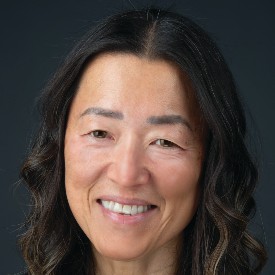












Below, Dr. Florence Comite shares five key insights from her new book, Invincible: Defy Your Genetic Destiny to Live Better, Longer.
Florence is a clinician-scientist and endocrinologist who has been studying healthspan and longevity for 30 years. She founded the nation’s first health center exclusively for women at Yale, the first physician-led app, called Groq Health, and her practice, Comite Center for Precision Medicine & Healthy Longevity.
What’s the big idea?
Just as putting a little bit of money in a 401(k) every paycheck can compound and go a long way toward making retirement financially comfortable, anyone can adopt health habits that help them stay physically and mentally healthy while aging. It is in our power to help our healthspan match our lifespan.
Listen to the audio version of this Book Bite—read by Florence herself—in the Next Big Idea App, or buy the book.

1. Don’t blame your health on your parents.
A recent study suggests that more than 50 percent of your health and lifespan are influenced by the genes you inherited. I believe it’s much higher than that. However, your genes do not have to be your destiny.
You can change the expression of your genes—how they work, or what’s known as epigenetics—through the way you live. This includes what you eat, how you sleep, physical activity levels, and how you handle stress. You are much more in control of your health than you realize.
2. They don’t teach that in med school.
While celebrating my med school graduation, my father asked, “How do I keep myself healthy for the rest of my life?” And I couldn’t answer him because they only taught me how to diagnose symptoms and treat the main complaint.
“The answer can be found by looking at the cellular level.”
Medical schools don’t teach proactive prevention. My father’s question haunted me for years until I started realizing that the answer can be found by looking at the cellular level—early clues predicting the emergence of chronic disease. That’s the time to interpret and be proactive to stop disease progression.
3. Family history isn’t the poor man’s DNA– it tells you even more.
Your health story is a summary of all the data that can help you and your physician accurately gauge your current health status and, more importantly, predict its trajectory and point toward possible interventions to change the course you’re on. But your health story is no CliffsNotes. It must be comprehensive to connect the dots and interpret what’s going on inside you. In my practice, a health story is made up of the following:
- Your medical history, lifestyle habits and environment.
- Your family’s history of health conditions.
- Key blood tests and data from wearables, like sleep trackers and continuous glucose monitors.
4. If you do nothing else: track your sugars and sleep.
There was a time in my life when I was sleeping terribly, eating junk food, and totally stressed out by overwork. I was overweight, and my bloodwork indicated that I was at risk of diabetes. There I was, a precision medicine doctor, and I couldn’t put my finger on what was wrong.
But then, by using an Apple Watch, Oura Ring sleep tracker, and an Abbott continuous glucose monitor, I uncovered the hidden part of my health story: My inadequate deep sleep triggered wild swings in my glucose, which caused cravings for quick-energy carbs and unhealthy foods. These three wearables taught me which lifestyle habits were sabotaging my health, and why. You don’t need a prescription for tools like these, and they can teach you how to turn your health around.
5. Eat, muscle-up, sleep.
Here are three simple tips that you can use right now to rewrite your health story and, in time, reverse biological aging:
- Sleep like a bat. Not upside down, but in a cool, dark place. Turn the thermostat down to 65 degrees, black out your windows, set your devices aside, and stop eating at least two hours before bedtime. No nightcaps. Getting seven to eight hours of quality sleep every night is the most important habit you can adopt to keep your system (especially your brain) in peak health.
- Start every meal and snack with some protein and fiber. Both are filling, digest slowly, and will minimize the impact on your sugars. You’ll crave less and consume less.
- Start strength training. You need to get greedy when it comes to muscle. It’s the closest thing there is to a fountain of youth, and we lose it every year. Muscle is an organ of longevity, a repository for glucose that keeps it from spiking in your bloodstream. Resistance training with bands, weights, machines, or your own body weight is non-negotiable if you are serious about living well as you age.
Enjoy our full library of Book Bites—read by the authors!—in the Next Big Idea App: