













Below, Michael Pollack shares five key insights from his new book, Sidewalk Nation: The Life and Law of America’s Most Overlooked Resource.
Michael is a Professor of Law and Associate Dean for Faculty Development at Cardozo Law School in New York City.
What’s the big idea?
Sidewalks are not a minor feature of our public spaces but a third space whose design and governance profoundly shape civic life.
Listen to the audio version of this Book Bite—read by Michael himself—in the Next Big Idea App, or buy the book.


1. Sidewalks support our lives.
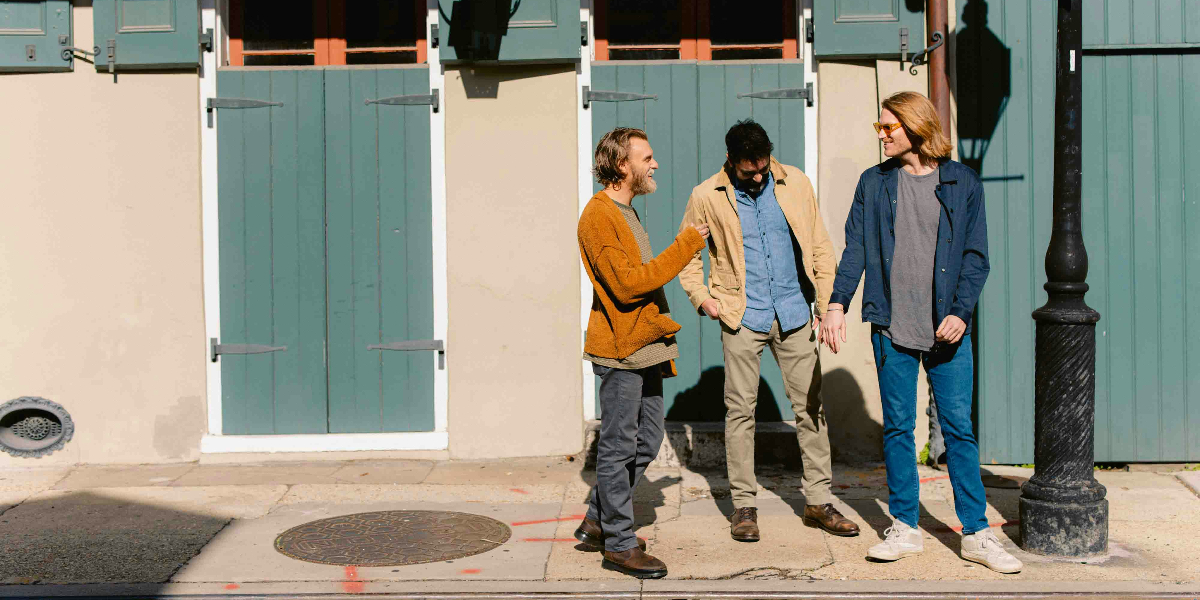
Sidewalks are some of our most essential public land uses and resources. They allow us to get from place to place, but they also connect communities, safely transport kids to school and recreation, and connect everyone to public transportation and commerce. They strengthen local economies, support critical infrastructure, and serve as “third places” where communities take root and blossom.
They’re sites of commerce: from dining to vending, advertising, waiting in line, and even new technologies like bikeshare, scooter rentals, EV charging, and delivery robots. They’re sites of speech, protest, and public art. They’re where people collect signatures for petitions and picket establishments they want to protest. They’re where unhoused people often live or at least spend time panhandling. They’re where police conduct a substantial amount of investigation, for better or worse, and they’re sites of much of modern surveillance architecture. They’re even places where we can work to manage climate change and create sustainable and resilient cities.
Of course, there are cities, towns, and neighborhoods with lots of sidewalks and lots of these activities. And there are places with far fewer. There is a surprising demand for sidewalks and for sidewalk life in many places that don’t have them. Whether and how to best meet that demand is a tough question, though. One that requires serious thought and management.
2. Sidewalk conflict.
With all these uses competing for the same bit of space, sidewalks are also serious sites of conflict. That’s been true for as long as we’ve had sidewalks, which is centuries. Sidewalks have been around in the U.S. since before the Revolutionary War, and abroad for even longer.
Sometimes those conflicts are very weighty. Fights over the role of women in our society, of people of color, immigrants, LGBTQ+ people, unhoused people, and more have played out on our sidewalks. For years, the law even limited the availability of sidewalks to people along these very lines—and it still often does for unhoused people. But law aside, where sidewalks are available to everyone on equal terms, that very fact creates its own conflicts because we place competing claims on them.
“Fights over the role of women in our society, of people of color, immigrants, LGBTQ+ people, unhoused people, and more have played out on our sidewalks.”
Economic uses of the sidewalk are a perennial source of clashes, as advertising and café tables encroach on pedestrian space, compete with neighboring businesses, and disrupt nearby homes. Delivery robots take up space too and can even make the sidewalk less accessible for people with strollers, wheelchairs, or other mobility limitations. Vending—especially vending engaged in by immigrants or unhoused people—has long been a salient point of conflict with neighboring and competing businesses. Social gatherings and protests compete with easy access and with other economic uses. In fact, sometimes that competition and disruption is the point. I could go on.
Nearly nowhere else in our lives and in our cities do these collisions take place with such breadth, frequency, and scale. But what ultimately sets sidewalks apart is not just the inherent and sprawling conflict among uses. Rather, it is how we take them for granted in policy and law.
3. Sidewalks shape law.
Sidewalks connect numerous issues of law and policy. Basically, anything you’re passionate about runs through the sidewalk, and vice versa: sidewalk choices touch everything you might care about. Some of these are obvious: property law, land use regulation, and the like. Others may be less obvious but no less important: disability rights, public health, taxes, commerce, historic preservation. And others may come to mind even less readily: democratic participation, privacy, free speech, racial justice, socioeconomic equity.
The law in each of these areas affects the sidewalks, and the sidewalks have influenced and will continue to influence the development of all of them. Sidewalks are a lens through which we can gain a more nuanced and deep understanding of many of these areas of policy. And it means that if you want to see change in any of them, you have to think about the sidewalk.
In wealthier communities, sidewalks and walkability operate as important amenities. They enhance quality of life, air quality, environmental quality, public health, property values, community formation, and more. But in poorer, underprivileged, and underserved neighborhoods, sidewalks are often in no condition to serve these critical functions well.
They’re in worse shape, they’re less connected to things, and they have fewer trees—which means it gets too hot to spend time there. To make matters worse, these same communities tend to be disproportionately reliant on sidewalks because residents are comparatively less likely to own or have access to private cars. There’s a racial dimension to this too: In city after city, data show that white households are almost three times as likely to own a car than Black or Latino households.
4. Sidewalks are badly managed.
With so much at stake, it’s critical that we get sidewalk law and policy right. But we don’t. There are two facets to the flaws of the status quo.
The first is the outsized role of individuals and property owners. In many cities and towns, the owners of adjacent property are required by law to play a central role in sidewalk management. In many municipalities, they are the ones who are responsible for repairing the sidewalk. The costs can pile up into thousands of dollars. They are responsible for shoveling snow and ice off the sidewalk. They’re sometimes even responsible for installing the sidewalk, and they may even have the power to dictate some of what happens there.
“In many cities, several scattered parts of city government regulate sidewalk uses.”
But private property owners don’t necessarily have the interests of the whole city at heart. Even if they do, they may lack the ability or resources to effectively shoulder these responsibilities. This is a big part of why sidewalks are worse in poorer neighborhoods. The consequence is that the quality of a neighborhood’s sidewalks rises and falls with its residents’ fortunes.
The second is that coordination within local governments tends to be quite poor when it comes to the sidewalk. I met with officials in cities and towns across the country, and everyone I met was capable, dedicated, and talented. But structural, legal, and financial constraints too often hold them back.
In many cities, several scattered parts of city government regulate sidewalk uses, and they don’t always coordinate very well. Departments of transportation, sanitation, buildings, consumer affairs, health, parks, and more all overlap on the sidewalk. Without any one of them seeing the whole picture, regulators can leave gaps or even create new and unintended clashes.
Together, these two legal choices—private responsibility and fractured governmental responsibility—have pretty bad consequences. For one, necessary sidewalk work and even broadly desired policy changes can fail to pan out. For another, the lines of public oversight and accountability become so tangled that residents don’t know whom to blame when things go wrong. And for another, since adjacent owners bear the burdens of the sidewalk, they often tend to think of that space as belonging to them and often will assert a degree of territorial behavior over that public space.
5. How we can save the sidewalk.
Two changes can go a huge way toward setting things right. Both would help ensure that our sidewalks can serve all the purposes they need to serve, handle the conflicts that arise there, and do so equitably and efficiently.
The first is to shrink the footprint of private owners in the sidewalk business. Municipalities should take on much more of this responsibility, and indeed, some are already doing so. In 2022, Denverites voted by referendum to make this shift in Denver, Colorado, and imposed a small sidewalk improvement fee on themselves to fund it. Cities in upstate New York, like Ithaca and Hudson, are pursuing similar change. More should follow in their footsteps.
“Effective regulation requires someone who can see the whole picture.”
The second change is to consolidate sidewalk responsibility inside of local governments. Instead of fragmented oversight, our cities would benefit from what I call Departments of Sidewalks. Effective regulation requires someone who can see the whole picture, and when it comes to sidewalks, there just is too often nobody empowered to see it, let alone respond to it. This Department of Sidewalks would change all of that.
It would see all the uses and conflicts and be empowered and accountable for managing them. It would lead to more coherent, one-stop-shop regulation that would make things easier for property owners, businesses, and all users of the space. And it would mean more efficient maintenance. And it would separate the responsibility for sidewalks from the wallets of the people who happen to live near them, enabling more communities to benefit from this critical resource.
Sidewalks are at the core of what makes cities and towns vibrant, connected, and safe places. But they are so easily and too often overlooked. Fortunately, there are cities and towns beginning to change that legacy, but more need to take up the challenge and do what’s necessary to make these public spaces work better for everyone.
Enjoy our full library of Book Bites—read by the authors!—in the Next Big Idea App: